English


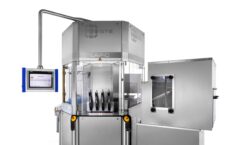
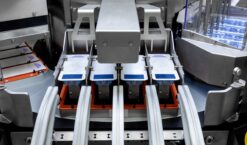
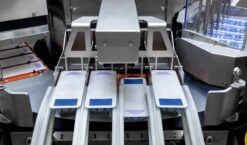
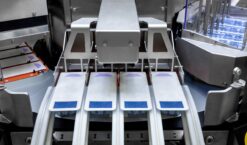
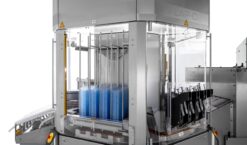
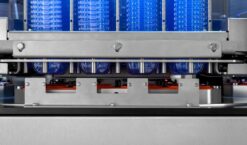
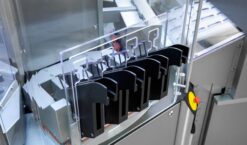
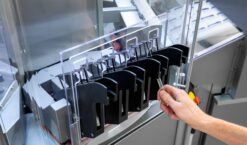
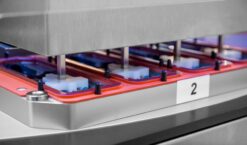
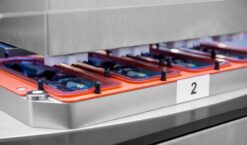
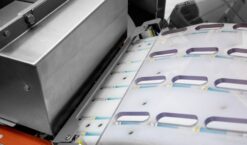
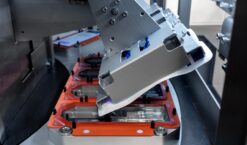
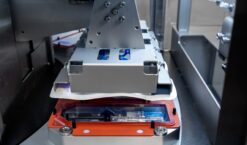
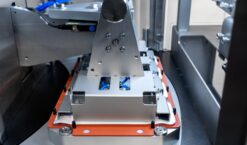
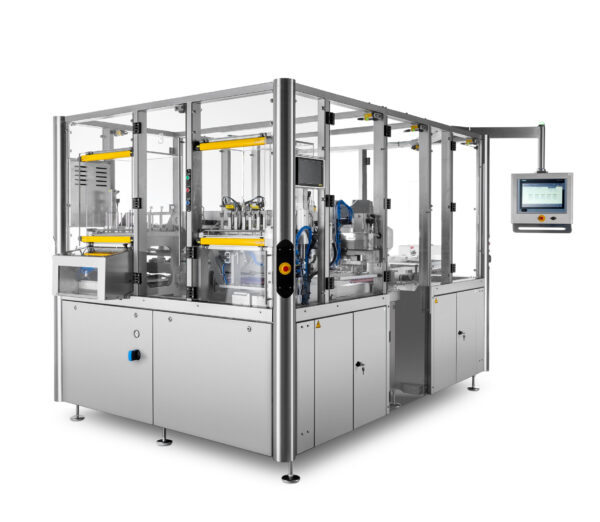
A station-by-station breakdown
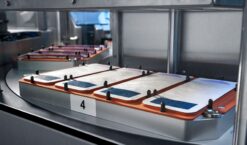
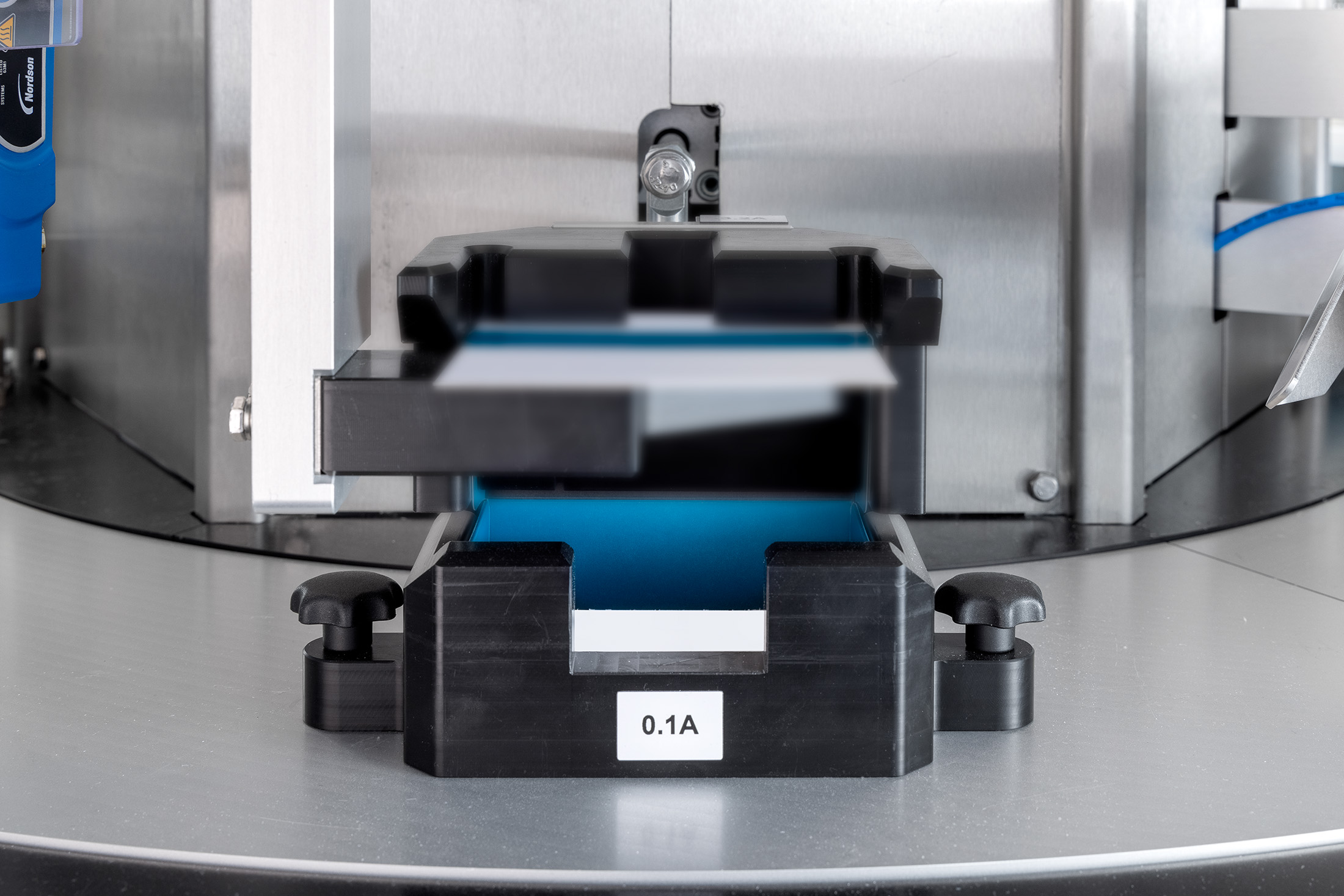
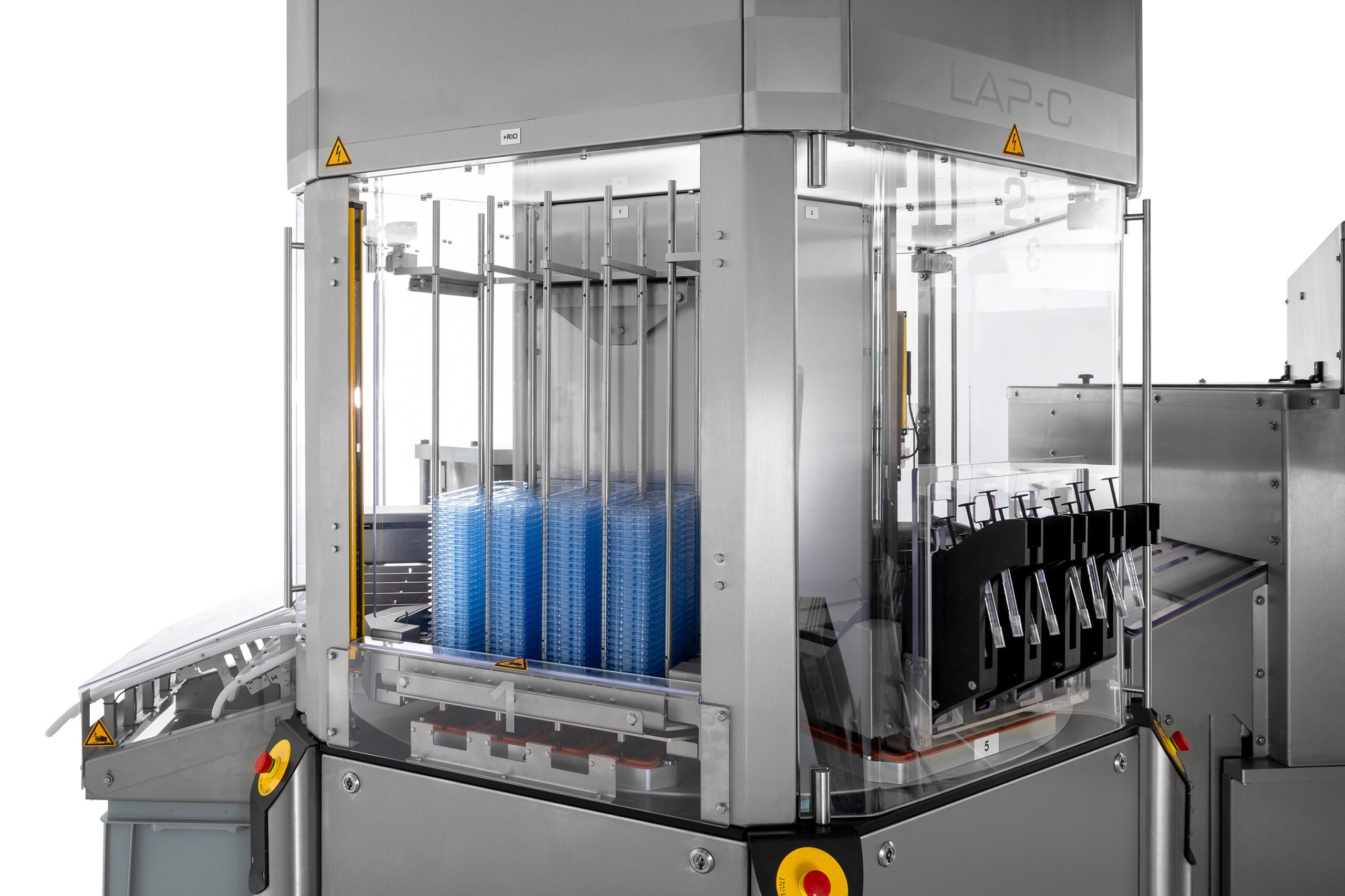
Station 1: The blisters are automatically placed in the quadruple mold from a warehouse.
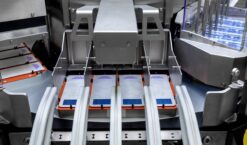
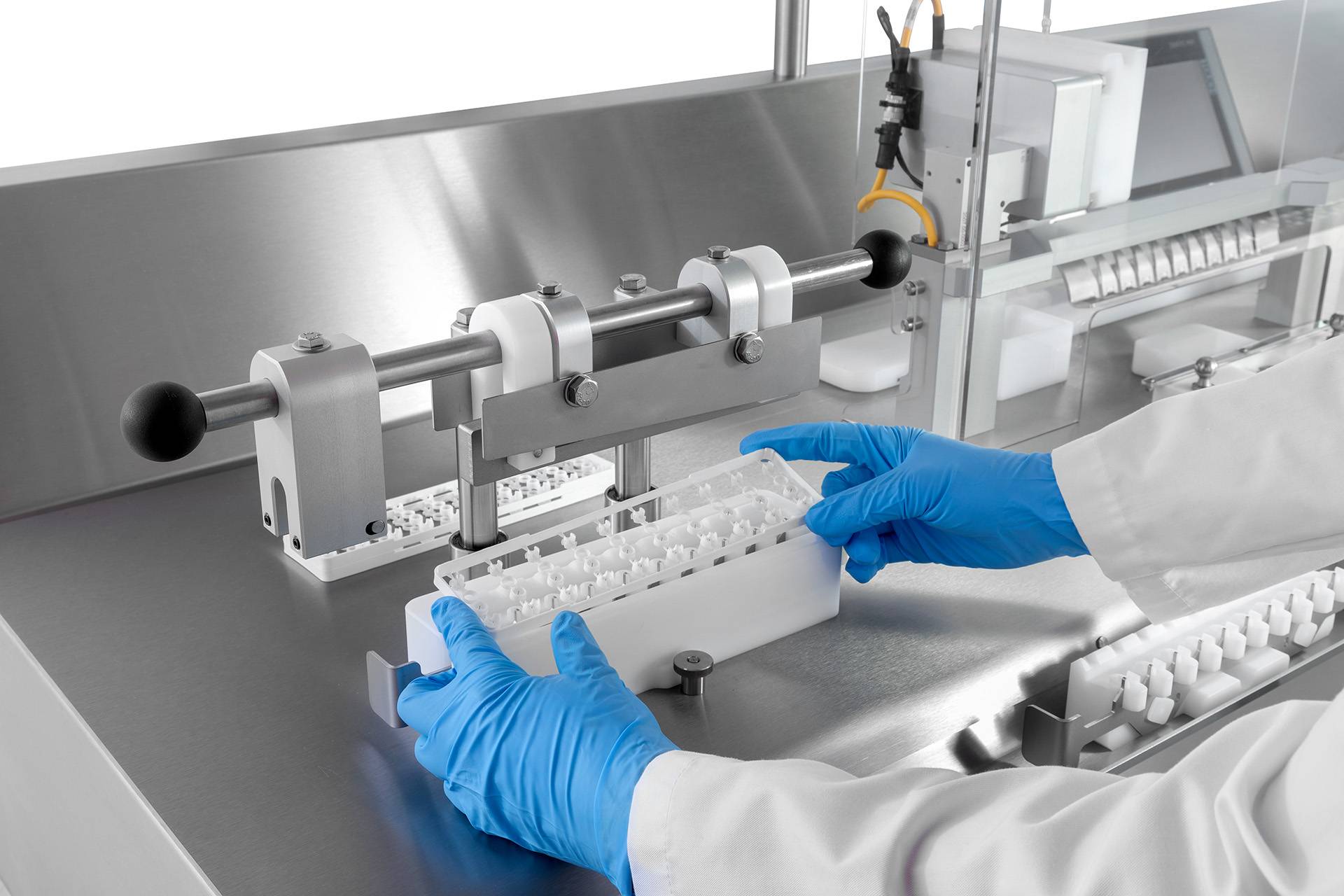
Station 2: The syringes are manually placed in a chute, then automatically placed in the blister. Of course, this manual step can also be replaced with automation. Ideal for, for example, larger quantities or creating a buffer in the supply process.
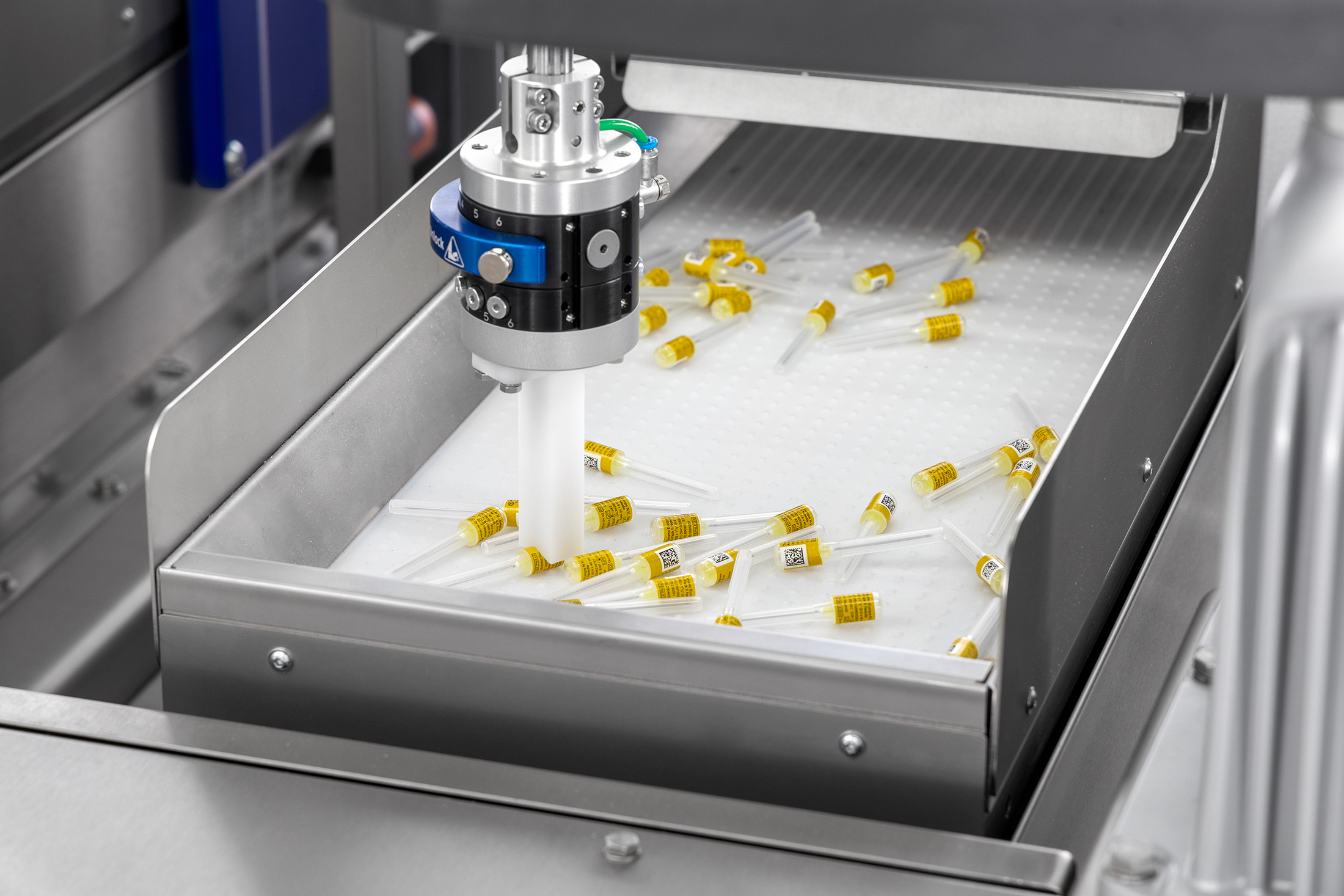
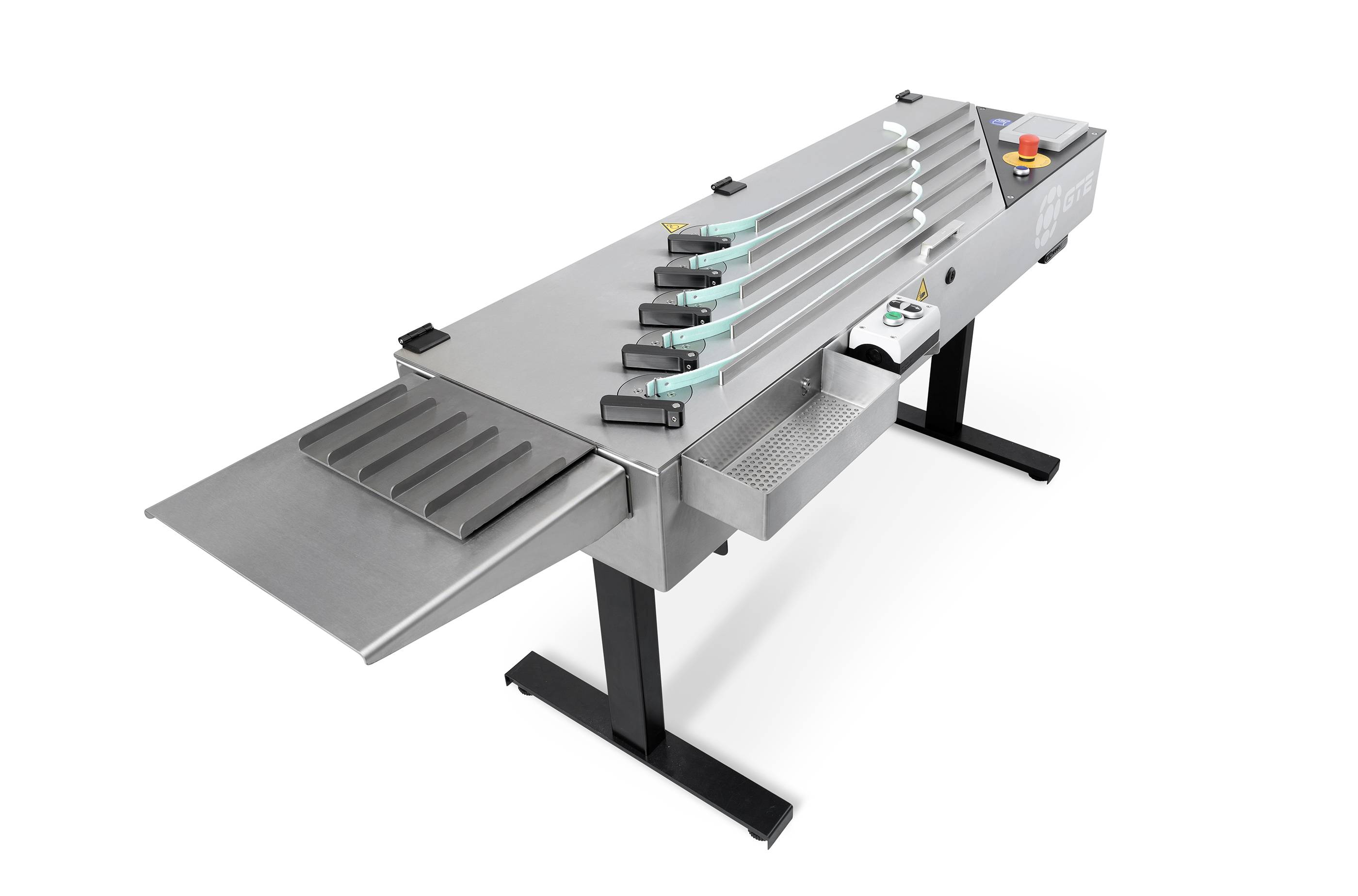
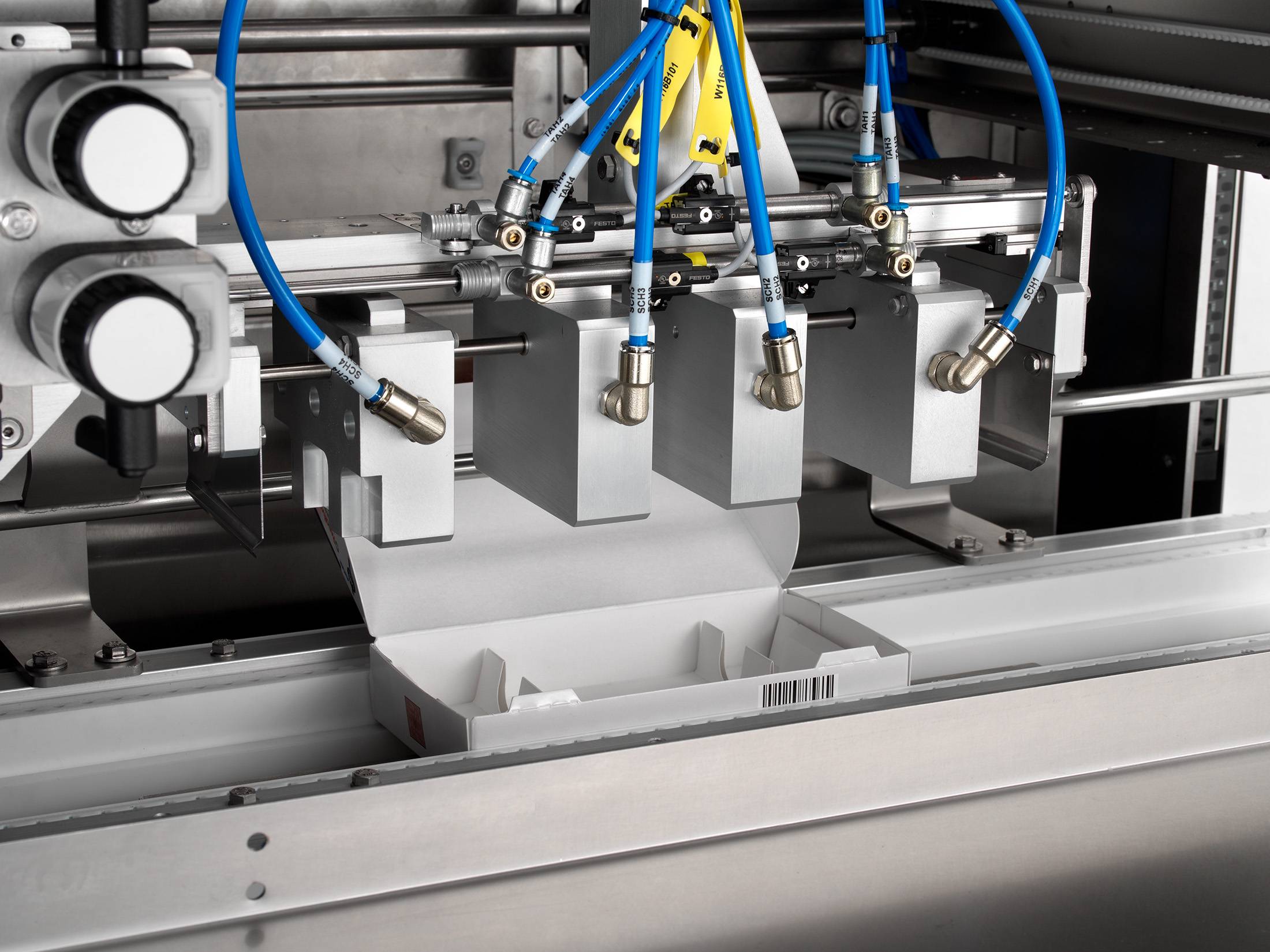
Station 3: The safety-wrapped needles are separated and aligned in the correct direction via a vibratory filler. The needles are then placed two by two in the blisters. The needles and the syringe are pressed into the blister with a set force.
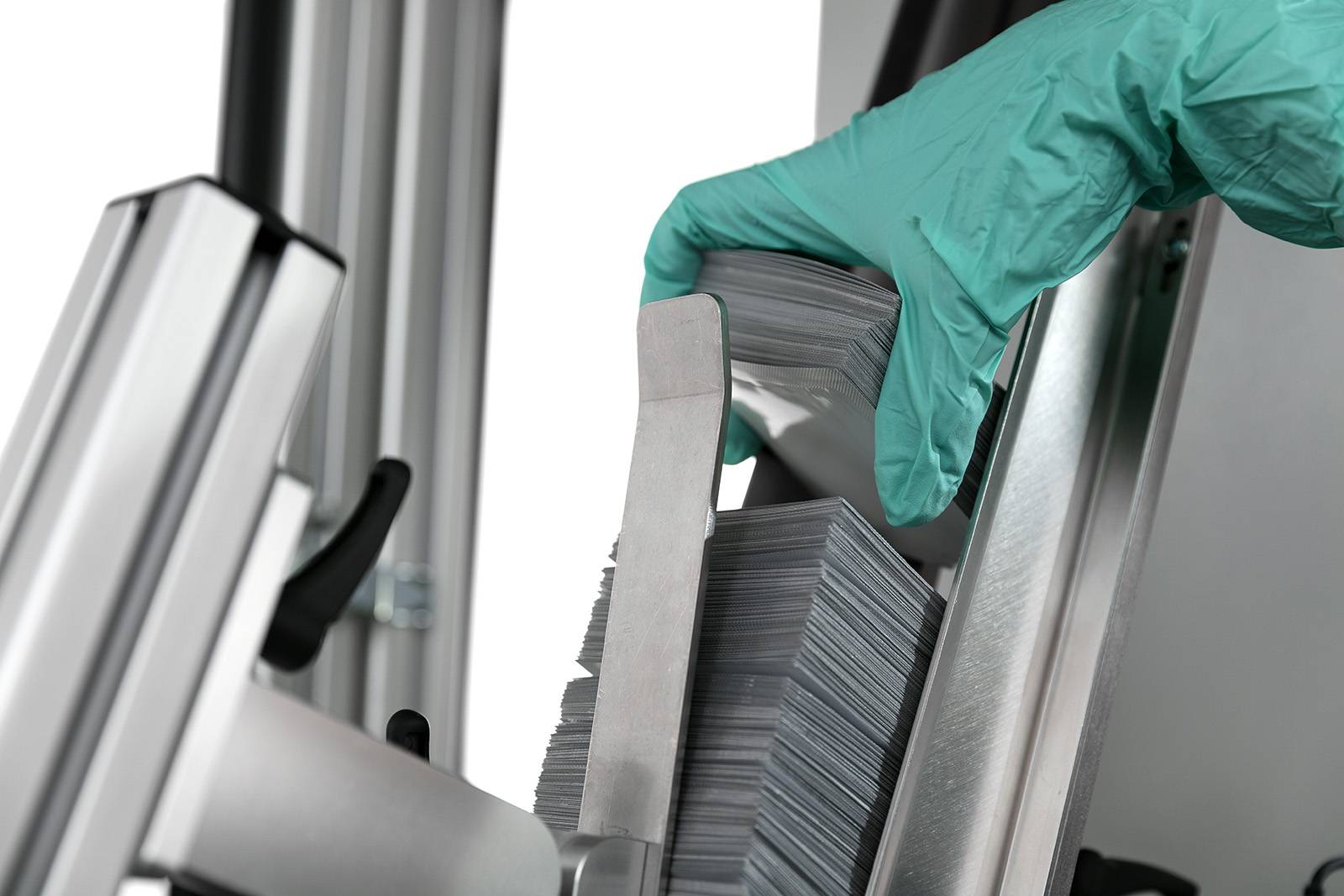
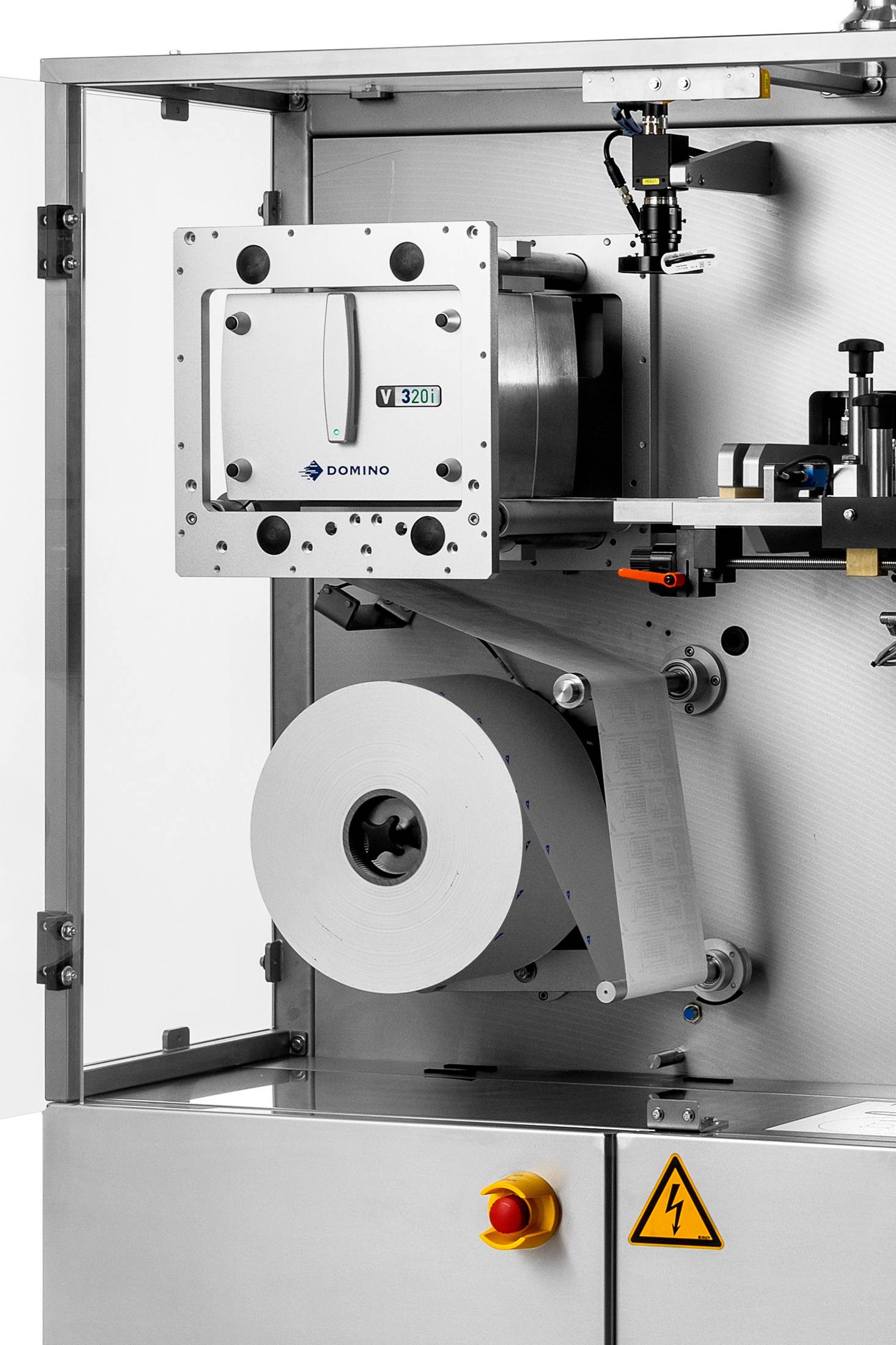
Station 4: The Vision System checks for the presence of all products. This system also checks whether all components of the syringe are present. Next, a Tyvek lid is separated and placed, after which the machine checks whether the lid has been correctly positioned.
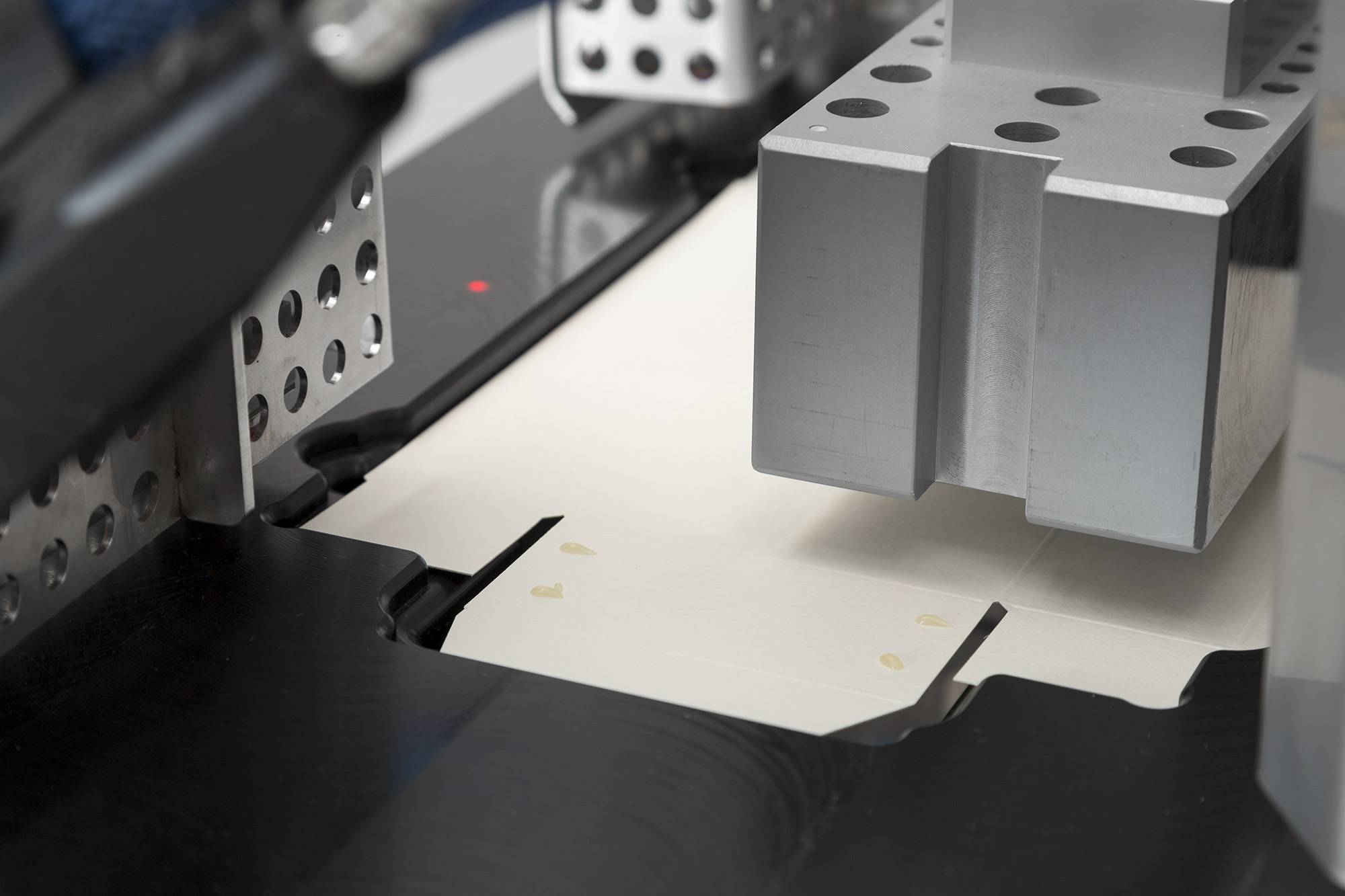
Station 5: The blister is sealed within the agreed seal window.
Station 6: If a product fails the visual inspection or does not meet the preset seal window, the station will reject it. Approved products are fed out of the machine.
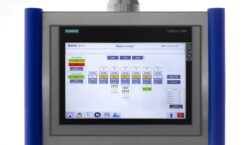
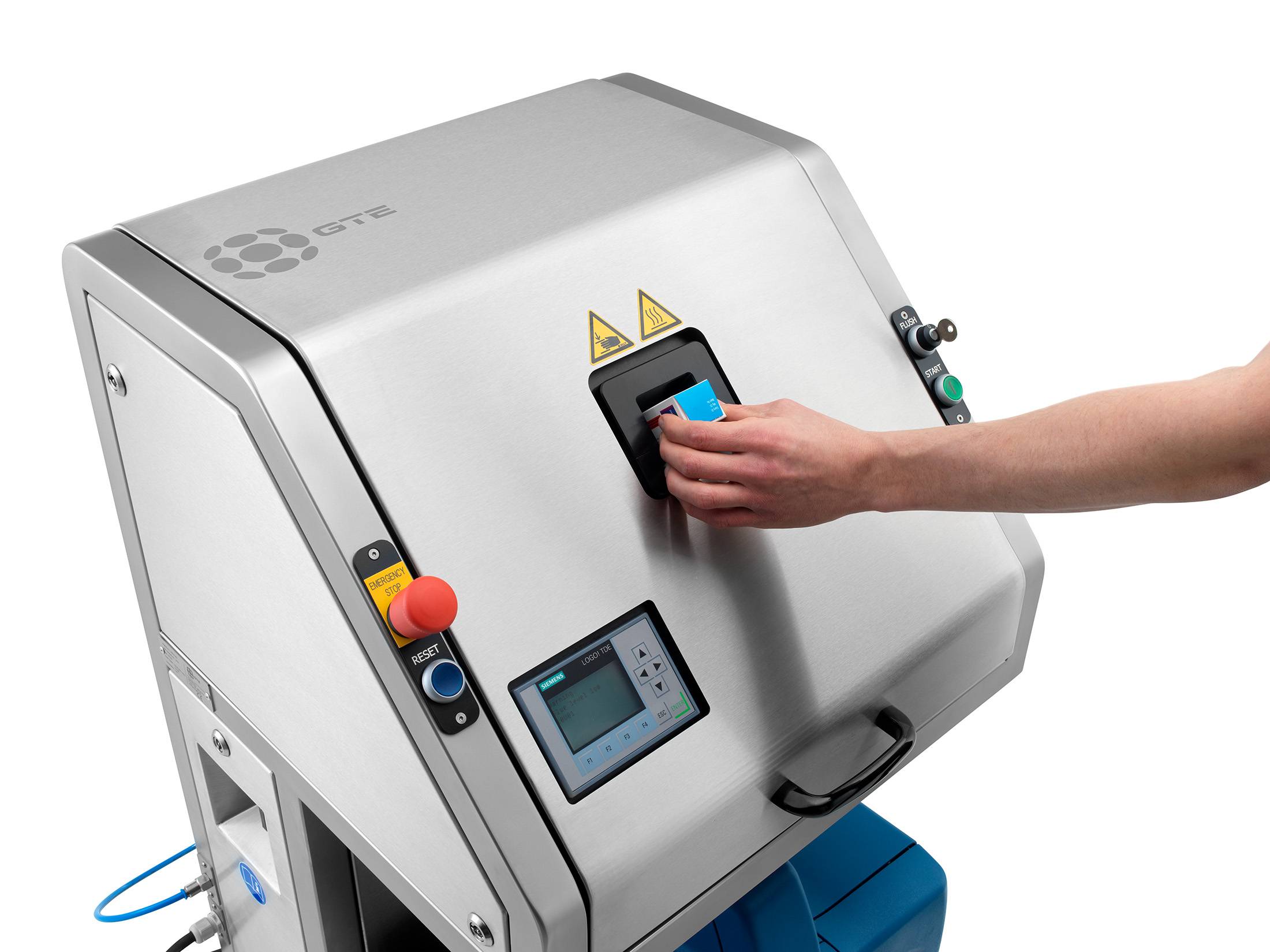
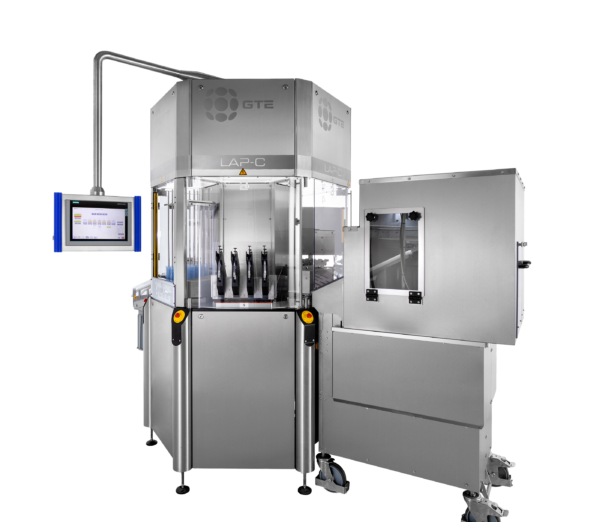
This machine makes use of Siemens controls. The LAP-C Platform is suitable for various processes and has a small footprint. The docking stations make sure this machine is accessible at all times.
- Specifications
- Fully customisable to your wishes and requirements
- Assembly and packaging of different products using interchangeable moulds
- Fully validated and compliant with established laws and regulations
- Quality control and validation during assembly and packaging process
- Expandable using our modular LAP-C Platform
Get more information
Wondering how the machine could be useful for your organisation? Request more information quickly and easily.
"*" indicates required fields

Our customers


Why choose GTE Engineering?
GTE specialises in designing and producing tailor-made machines for the medical and pharmaceutical industry. Based on your specific needs, we’ll work together on the solutions to the issues you’ve run into.
Curious about what we could do for you?

Our newest blister sealer solution
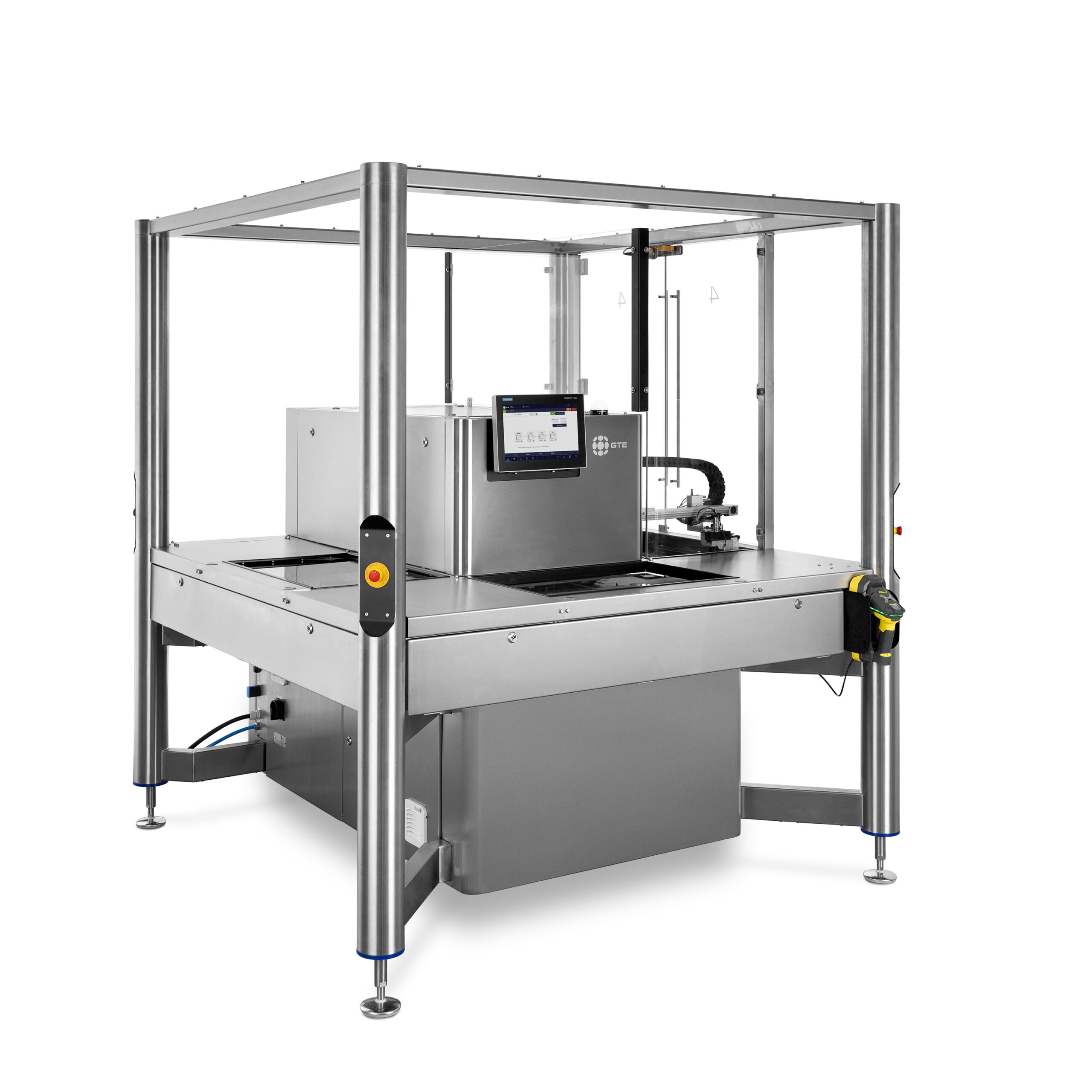
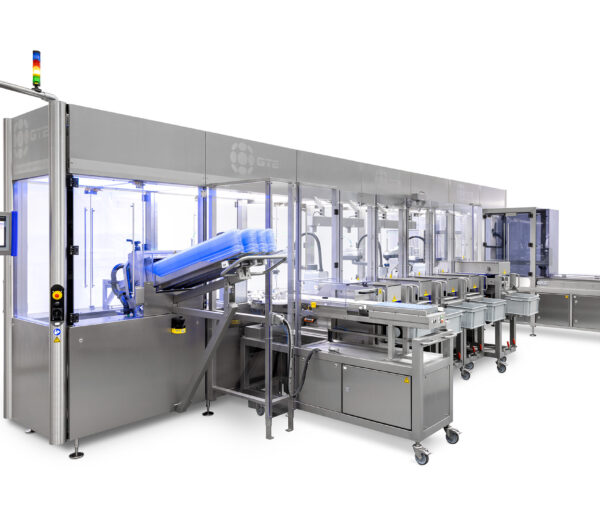
Introducing the GTE BAP-C Rotary Sealer – a next-generation blister sealing solution built on GTE’s proven technology and decades of expertise. Designed to accommodate larger blister formats and high-output production without compromising its compact footprint. The BAP-C is GMP compliant to meet the demands of medical device and pharmaceutical packaging production under ISO Class 7 cleanroom environments. The BAP-C Rotary Sealer builds on GTE’s extensive experience in blister sealing technology, including co-development of standard sealers used by leading industry partners. GTE has also successfully integrated advanced automation features on standard sealers, further demonstrating commitment to innovation, reliability, and seamless integration in high-demand production environments.
Optional automation modules
- Lid Placement Station: Automatic placement from magazine with double-lid detection
- Printing Station: Direct printing (variable) data on lid possible with various printers, for example: Wolke m610® / Videojet 8520 for direct lid printing
- Labeling Station: Print & apply variable data labels (if no print station is present)
- Cobot infeed and/or outfeed: automatic infeed filled blister and/or outfeed sealed blister possible.
- Various vision Checks: Product presence, 2D code and text verification on product, on lid, etc., lid position check, lid print check (variable data and artwork check).


Let us call you back
Curious about how our machines can be used within your organization? Request more information quickly and easily.
"*" indicates required fields
We are ready to help you!
Mercuriusplein 45971 LW Grubbenvorst (Nederland)